The First Session Is a Visit, Not a Verdict
A first session in a new sport can show you how the place feels, how the activity moves and what you might want to try next without forcing a decision.
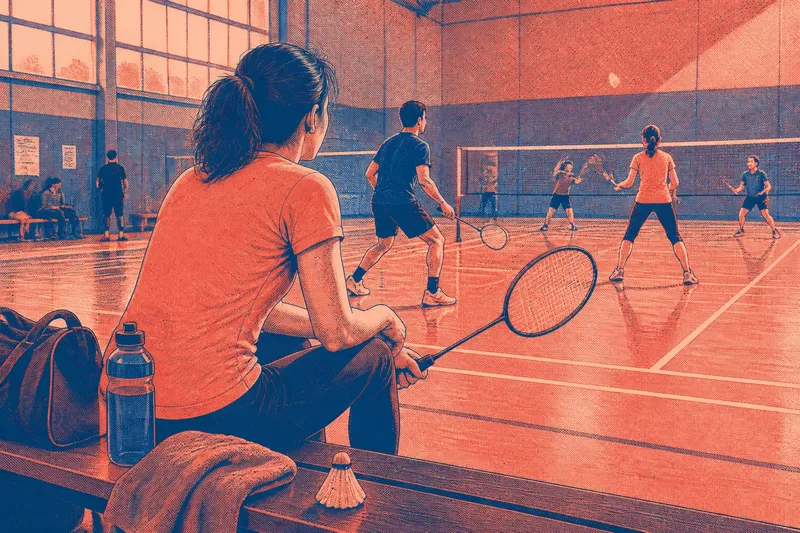
You leave a beginner badminton session with a borrowed racket, a damp fringe and one clear thought: you are not sure yet. That is a useful result. A first session in a new sport is a visit, not a verdict on whether you are naturally good at it or should commit for months.
Give yourself a short period to notice what happens before, during and after the activity. The point is not to score your enjoyment, but to gather specific impressions: how the setting works, whether the pace suits you today, and which parts make you curious enough to return. A modest plan makes those observations easier to trust.
Before the session, choose what you want to notice
Before booking, pick a setting that allows newcomers to take part without needing to understand every rule in advance. This might be a public swimming session, a beginners’ climbing class, a casual five-a-side game or a local dance session. Look for a clear description of what to bring and how the session begins.
Set one or two questions for yourself, rather than a target. You might want to notice whether instructions are easy to follow, whether there are pauses to catch your breath, or whether you enjoy learning a movement even when it feels unfamiliar. These questions give your attention somewhere useful to go if nerves make the whole experience feel like one blur.
Prepare the practical details in a low-key way. Put suitable clothes and any required kit near the door, check the venue’s arrival information, and leave enough time to find the entrance without rushing. If you need to borrow equipment, ask in advance what is available; a racket, yoga mat or set of climbing shoes can feel different from your own, but borrowing lets you see how the session works before making a purchase.
Make room for a change of mind. A session can be poorly timed, crowded or simply not your kind of activity, and that does not say much about your ability to enjoy another sport. Your task is to show up curious, not to prove you belong there.
During the session, watch how the setting works
At the start, notice what happens between arriving and beginning. Is there a place to leave a bag? Does someone explain where newcomers should wait? Are the instructions spoken, demonstrated or both? These details affect how comfortable it is to join in, especially when you do not yet know the usual routines.
Then notice the shape of the activity. Some sessions move through short rounds with frequent stops; others ask you to stay engaged for longer stretches. Pay attention to how the pace feels in your body, but do not assume that one difficult moment describes the whole session. A confusing warm-up or an awkward first attempt may give way to a more settled rhythm.
When an instruction is unclear, a simple question can help: “Could you show me that movement once more?” or “Where should I stand for the next round?” You are not expected to arrive knowing the unwritten rules. A welcoming response is useful information about the teaching style; so is a response that leaves you more uncertain.
Keep a small distinction in mind: discomfort from being new is not always the same as a poor fit. Trying a movement in front of unfamiliar people can feel exposed even when the group is friendly. By contrast, if the format repeatedly leaves you unable to take part or ask for clarification, the issue may be the session’s structure rather than your willingness.
Afterwards, record impressions without grading yourself
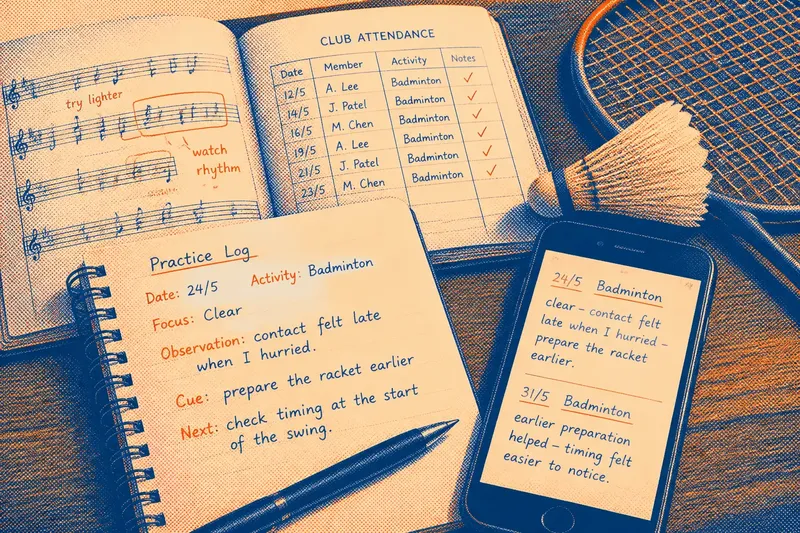
Once you have had a moment to change and catch your breath, make a brief note in your phone or on a scrap of paper. Use plain observations rather than a score: “The coach demonstrated each drill,” “There was little waiting,” or “I liked the short rally game more than the warm-up.” Concrete details are easier to use later than a broad label such as “good” or “bad”.
Separate what you noticed about the activity from what belonged to the day. You may have arrived tired after work, felt awkward because you did not know anyone, or enjoyed the session because a friend came along. Those circumstances matter, but they are not the whole sport. Naming them helps you avoid treating a single mood as a fixed preference.
Say you attend a beginner rowing session after a busy day and find the opening explanation hard to follow, but enjoy the steady rhythm once you are on the machine. You could note both points and ask whether the next session has a slower introduction; the expected result is not a final answer, but a clearer sense of whether the activity itself interests you when the setup is easier to follow.
If something felt uncomfortable in a way that raises a safety concern, stop and speak to the instructor or venue staff rather than treating it as a test of toughness. For routine questions about equipment, clothing or participation, follow the venue’s information and ask the instructor what is appropriate for that session.
Use the next few days to make a measured choice
Let the first impression settle before deciding what to do. During the following day, notice whether you find yourself thinking about a particular part of the session: a satisfying movement, a friendly exchange, or the possibility of learning a skill. You do not need to feel eager to train immediately. Mild curiosity can be enough to justify another visit.
Over the next few days, check the practical fit as well as the appeal. Consider the journey, the start time, whether the venue has a beginners’ option, and whether you can borrow the equipment again. A sport can be enjoyable in principle yet awkward to fit into your current routine; noticing that distinction helps you choose a different session or setting instead of blaming yourself.
If you are undecided, choose one modest follow-up: attend the same session again, try a different beginner class in the same sport, or ask the organiser what a typical session involves. Keep the question narrow. For example, if you liked swimming but found the public lane busy, asking about a quieter session tells you more than deciding that swimming is not for you.
If you do not want to return, you can still keep the information. Perhaps you prefer individual practice to team play, a quieter room to a busy court, or instruction that includes a demonstration. Those preferences can guide your next choice without turning the first session into a failed attempt.
What should you decide after one session?
How do I know whether I disliked the sport or just felt nervous?
Look for the moments when the nerves eased: did any part become enjoyable, absorbing or worth understanding? If everything remained uncomfortable, that is still a valid reason to pause, but a second visit in a more suitable setting may help separate unfamiliarity from lack of interest.
Should I buy equipment before trying the activity again?
Usually, wait until you know what the session requires and whether you want to return. Borrowing or hiring can help you learn which items are genuinely needed; ask the venue about its arrangements before buying something designed for a particular class or sport.
What if I was the least skilled person there?
Being new means you are likely to need more explanation than people who already know the routines. Notice whether the session makes space for that learning, rather than using other participants’ ability as a measure of what you should already be able to do.
How many sessions should I try before choosing?
There is no fixed number that suits every person or activity. Another visit is useful when you have a specific question to explore, such as whether the pace becomes more comfortable or a different class format suits you better; you can stop when the cost or experience no longer feels worthwhile.
Make the first visit useful, even if it is the last
Write down one thing you would seek again and one thing you would change. That might mean keeping the friendly instructor but choosing a quieter time, or liking the movement while looking for a shorter introductory class. This turns an uncertain first visit into practical guidance for your next decision.
The first session in a new sport does not need to reveal a lasting identity or settle what you will do for the rest of the year. Treat it as a chance to learn how the activity feels in this particular place, on this particular day. If you leave with a better question than the one you arrived with, you have something useful to take to the next visit—or to the next sport you choose.